Blog about china will be here, i just need to know how to edit this
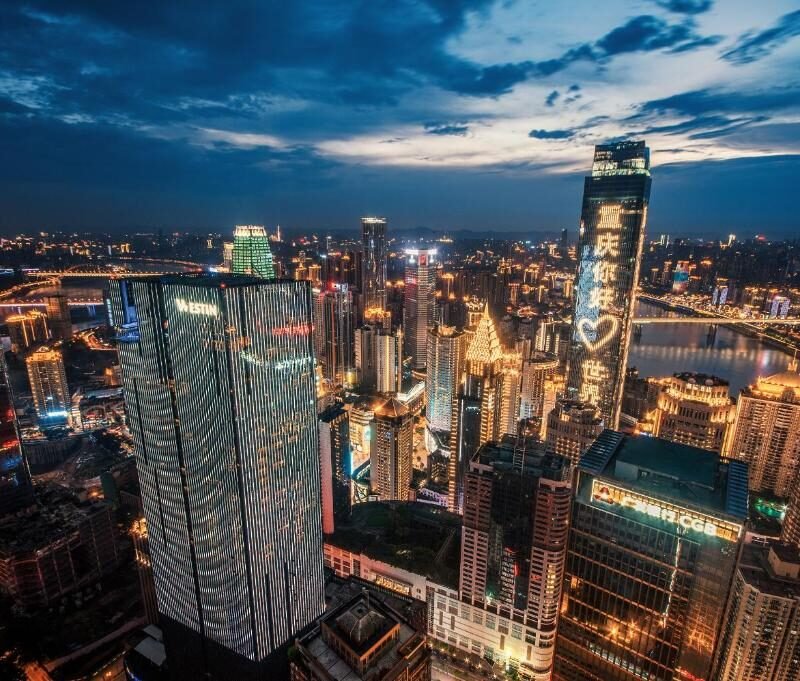
Chongqing: A City of Neon, Streets, and Sky-High Luxury
Arrival in Chongqing: Stepping Into Another World
China feels like it exists on a different rhythm, and arriving in Chongqing truly drives that home. Coming from the UK, where English is everywhere and life often moves at a predictable pace, stepping into a city where almost nobody spoke English was both thrilling and a little intimidating. There was a quiet, subtle kindness in people’s gestures small smiles, polite nods, fleeting moments of connection that didn’t require words. Yet, there was also the undeniable sensation of being watched.
At first, the stares were disconcerting. Curious eyes followed two foreigners navigating streets lined with neon, the hum of traffic, and a language I couldn’t understand. It didn’t feel unkind; more like fascination. Over three days, I counted at least fifty moments when strangers openly lifted their phones, some discreet, others bold enough to gesture toward us, recording what they saw.
It was an unfamiliar sensation. In the UK, personal space and unspoken boundaries are the norm. Here, none of that applied. At first, I felt exposed. Why are you filming me? It was intrusive, almost alarming. But slowly, I realized we weren’t being singled out. We were simply unfamiliar. Faces they didn’t see often. A quiet interruption to their everyday rhythm.
One moment stands out vividly. My friend and I were seated at a small restaurant, food spread across the table, lost in conversation. A man to my left held his phone up, gesturing toward us as if narrating a discovery to someone on FaceTime. I froze for a moment, then instinctively smiled and waved. He paused, surprised, then grinned and waved back. No words were exchanged. No conversation. Just a brief, silent connection before we returned to our meal.
These encounters became the rhythm of our trip. Stop, stare, record. Occasionally, a nod or a smile. No questions. No attempt at conversation. Even at the airport, amidst the chaos of arrivals and departures, people glanced, hesitated, lifted their phones, then looked away, as if embarrassed by their own curiosity.
Over time, this discomfort transformed into something else entirely. It stopped feeling personal and became a reminder that we were guests in a culture that moves differently, communicates differently, and sees the world in a way we weren’t accustomed to. And yet, even without language, there was communication. Gestures, nods, shared glances, moments of connection that required no words at all.
Leaving the airport, the reality of being somewhere completely different hit fully. The terminal doors slid open, and we stepped into a world that didn’t pause for us. Signs we couldn’t read. Voices moving around us in a language that felt fast, rhythmic, and utterly unfamiliar. Normally, even in faraway countries, you find someone who speaks English, even if just enough to get by. Here, there wasn’t a word. Communication became nods, gestures, pointing, screenshots on phones. And oddly, it made everything feel sharper. Louder. More alive.
The City Revealed: Neon Dreams and Layered Streets
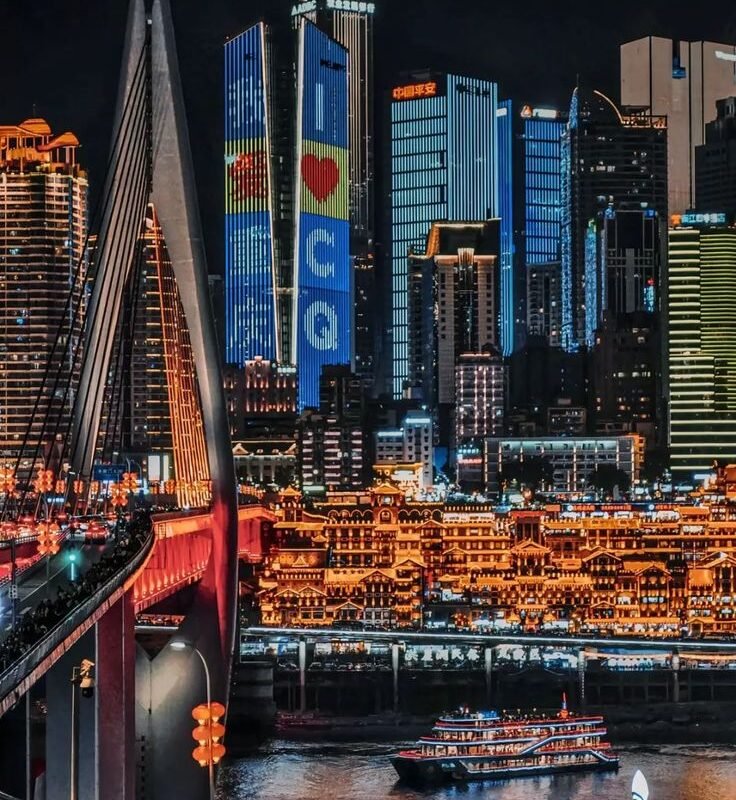
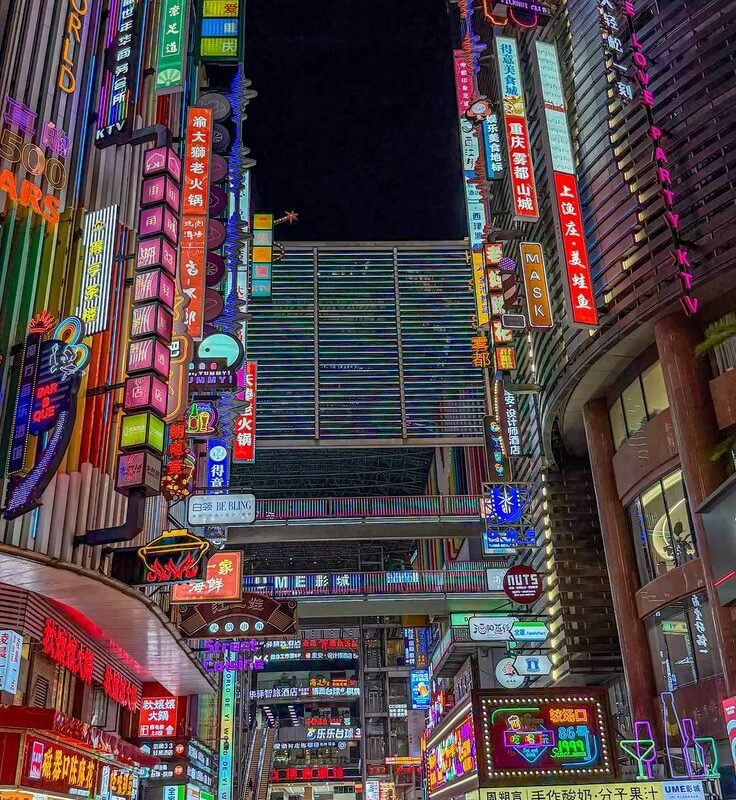
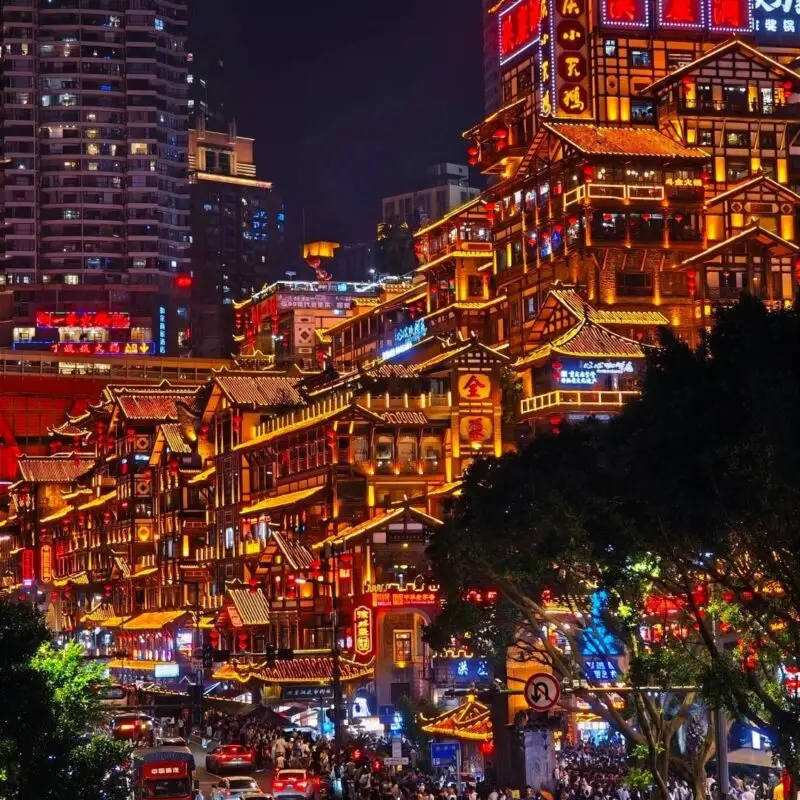
After wandering the bustling food stalls of Jiefangbei, we decided to explore one of Chongqing’s most unique destinations: Hoya Cave. From the outside, the building alone was enough to stop us in our tracks; its architecture was phenomenal, a soaring structure lit up with intricate lights that traced its curves and edges, making it glow like a jewel against the night sky. You could see immediately that this wasn’t just a market it was an experience.
Stepping inside felt like entering a different world. The cavernous interior opened into a maze-like shopping complex, sprawling across multiple floors, with everything imaginable at your fingertips. Clothes, shoes, accessories, electronics, souvenirs, spices, local snacks, teas, and trinkets of every shape and color competed for attention in a sensory explosion. The air was alive with movement, chatter, and the rhythmic call of vendors beckoning you to stop, look, and buy.
One of the first things we noticed was the traditional Chinese wellness stations tucked between the modern shops. Intrigued, we decided to experience one of their most unique offerings: ear cleaning. For around £10–£20, we were guided into a small, serene corner where practitioners delicately removed wax while chatting quietly, using intricate tools that made the process feel more like an ancient ritual than a service. It was relaxing, surprisingly satisfying, and left us laughing at how such a simple act could feel indulgent.
As we wandered deeper, we were drawn to the food stalls scattered among the shops. Skewers sizzled, buns steamed, and sweet treats glimmered under the warm lighting. We sampled local delicacies we hadn’t tried yet, letting our curiosity guide us. Every bite told a story, of spice, texture, and centuries of culinary tradition and walking from stall to stall, it was impossible not to feel swept up in the energy of it all.
Hoya Cave also offered shops dedicated to traditional Chinese wear from centuries past. The intricate silk robes, embroidered jackets, and ornate headpieces transported us to another era. Some stores even offered photo shoots, allowing visitors to rent the garments and step fully into the history they represented. We couldn’t resist, the fabrics shimmered under the lights, each stitch telling a story of craftsmanship and culture. Watching others transform into historical figures through costume and photography added a theatrical element to the market, making the visit feel part museum, part performance, and entirely immersive.
Of course, with any vibrant market comes the thrill and mild chaos of negotiation. Vendors enthusiastically encouraged you to try, touch, and buy. From handcrafted jewelry to quirky gadgets and souvenirs, it was impossible not to get pulled into the experience, haggling playfully while soaking in the sights, sounds, and smells.
Walking through Hoya Cave, it became clear that part of the enjoyment wasn’t just the shopping or food, it was the rhythm of the space itself. Layers of light reflected off polished floors, echoing footsteps blended with music drifting from a nearby store, and the chatter of dozens of languages created a symphony of human activity. Every corner revealed a new sight: a neon sign flickering above a sweet shop, a mannequin dressed in ancient Chinese attire, a vendor expertly flipping skewers, a quiet station where traditional crafts were made in front of your eyes.
By the time we left, hands full of treats and memories, we weren’t just carrying souvenirs we were carrying the energy and heartbeat of Hoya Cave itself. It was chaotic, beautiful, and alive a microcosm of Chongqing in a single building, where history, culture, food, and commerce collided into an unforgettable experience.
Jiefangbei Pedestrian Street: A Feast for the Senses
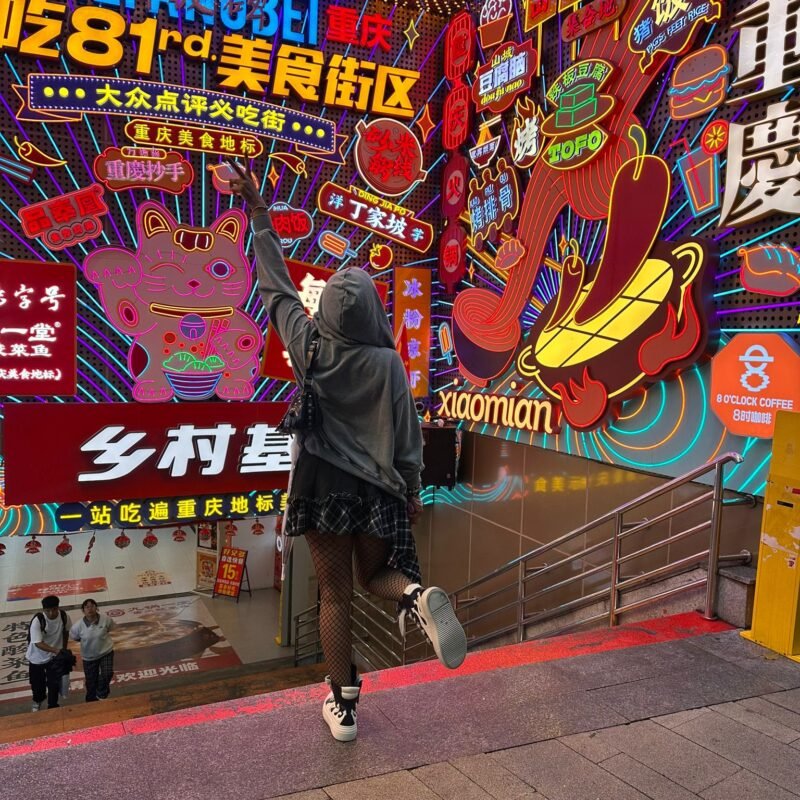
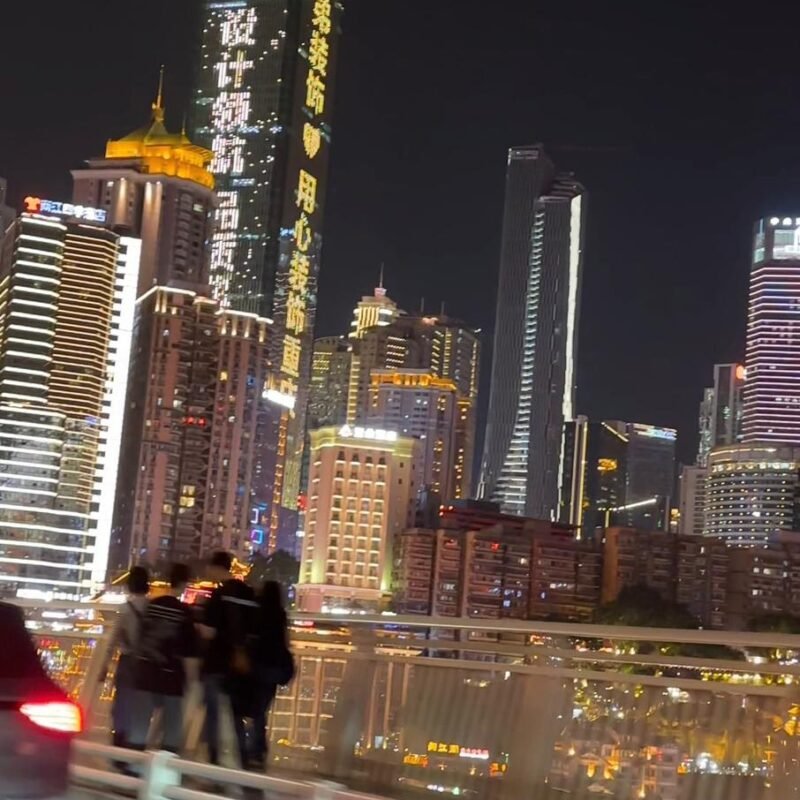
Jiefangbei Pedestrian Street is Chongqing’s heartbeat. Towering buildings loom above, LED screens flash endlessly, and the streets pulse with movement, sound, and color. It feels alive without feeling rushed, chaotic without being overwhelming.
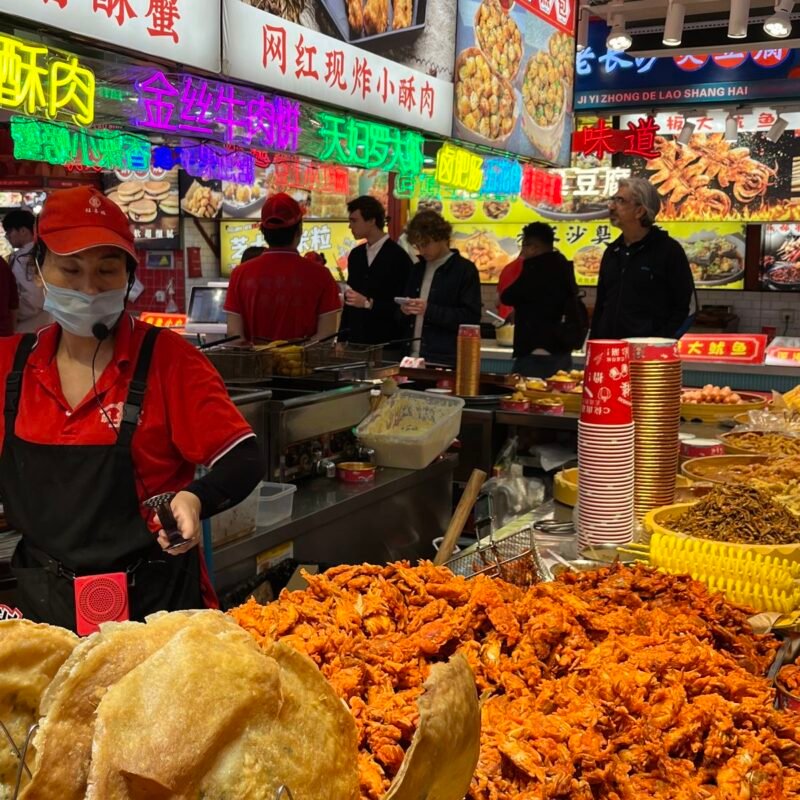
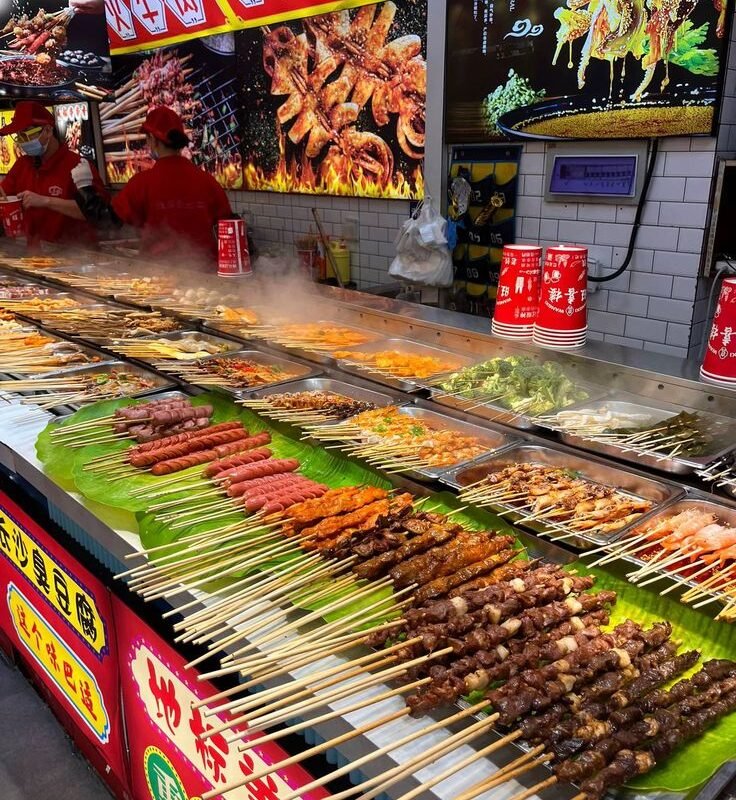
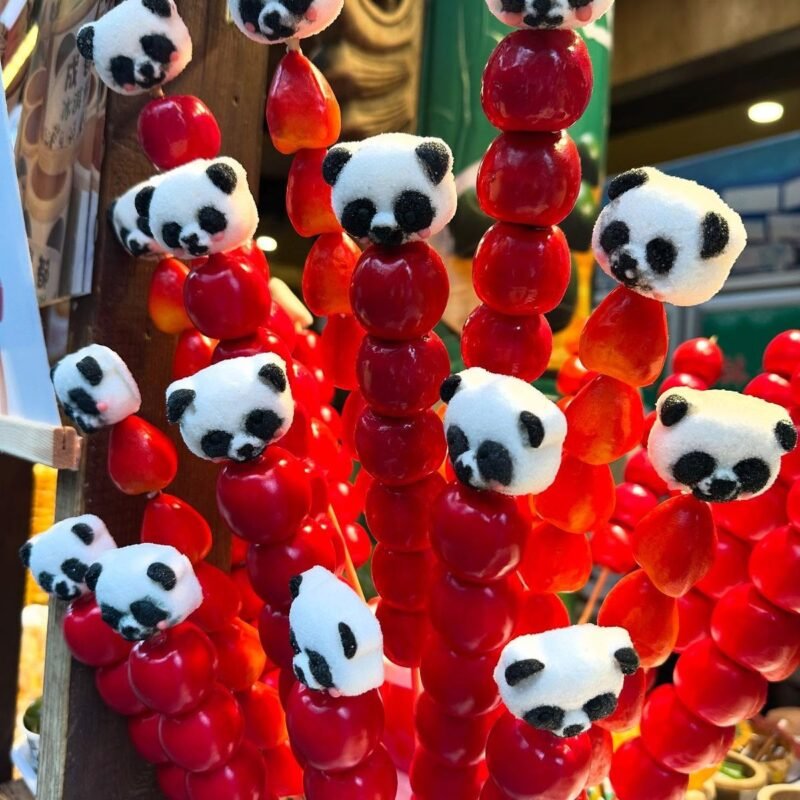
We were drawn to a food market tucked just off the main stretch. Red lantern-style lights glowed overhead, neon flickered across metal counters and glass displays. The air was thick with scents spice, oil, smoke, sweetness mingling together into an intoxicating perfume. Every few steps, something new caught our eye: skewers of meat sizzling over open flames, dumplings folded at lightning speed, bowls of noodles swimming in molten chili oil, crispy pancakes, fried snacks, bubbling broths, unfamiliar ingredients daring us to try them.
Prices were shockingly low. Food felt approachable, inviting, impossible to resist. Discipline went out the window. Once we started, we couldn’t stop.
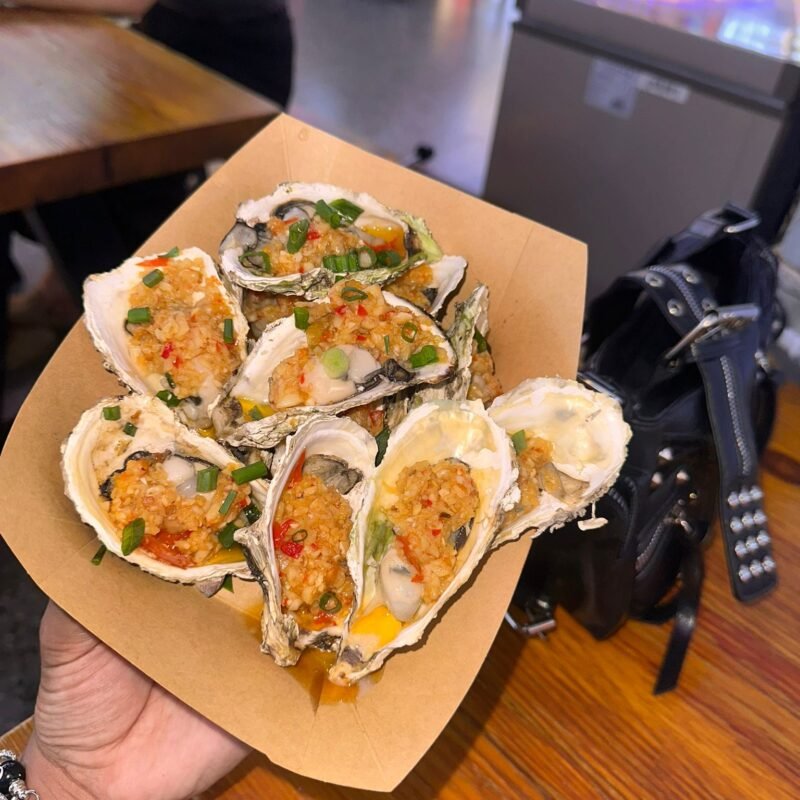
Skewers were first: chicken, beef, lamb, seafood, all brushed in oil, dusted in chili, tossed on the grill. Oysters on skewers smoky, briny, garlicky were unexpectedly delicious. Then noodles: thick, thin, hand-pulled, some numbing with Sichuan pepper, others comforting and rich. Corn dogs, fried chicken, pancake wraps, sweet treats every bite was an adventure.
Eating like this was communal. You stand, eat, move on. No menus, no pressure, just flavors colliding, laughter between bites. Closing my eyes now, I can still picture it: neon overhead, chili on my lips, city hum around us.
High-End Dining and Rooftop Views
We also experienced a rooftop dining moment that felt cinematic. The city stretched out below us as the sun set, streets coming alive with neon. Each dish was thoughtfully prepared, presented beautifully, and packed with flavor. But it wasn’t just the food it was the combination of views, ambiance, and city energy. Sitting there, I felt like I was witnessing the heartbeat of Chongqing itself.
From the rooftop, we noticed tiny details that made the experience even more immersive. A street musician below played an old Chinese flute, his melody drifting up with the evening breeze. A group of friends laughed over hotpot at a corner table on the street, their chatter blending into the city’s rhythm. The scent of grilled skewers rose to us on the wind, carrying the essence of the street markets even up here. It was a reminder that, in Chongqing, life happens everywhere from sky-high terraces to neon-lit sidewalks.
Wandering the city centre offered other highlights: vibrant markets overflowing with trinkets and goods, the unique experience of traditional ear-cleaning as part of Chinese wellness, and exploring clothing shops that revealed the evolution of fashion from ancient garments to modern interpretations. Tradition and modernity blended seamlessly, giving a deeper appreciation for the culture.
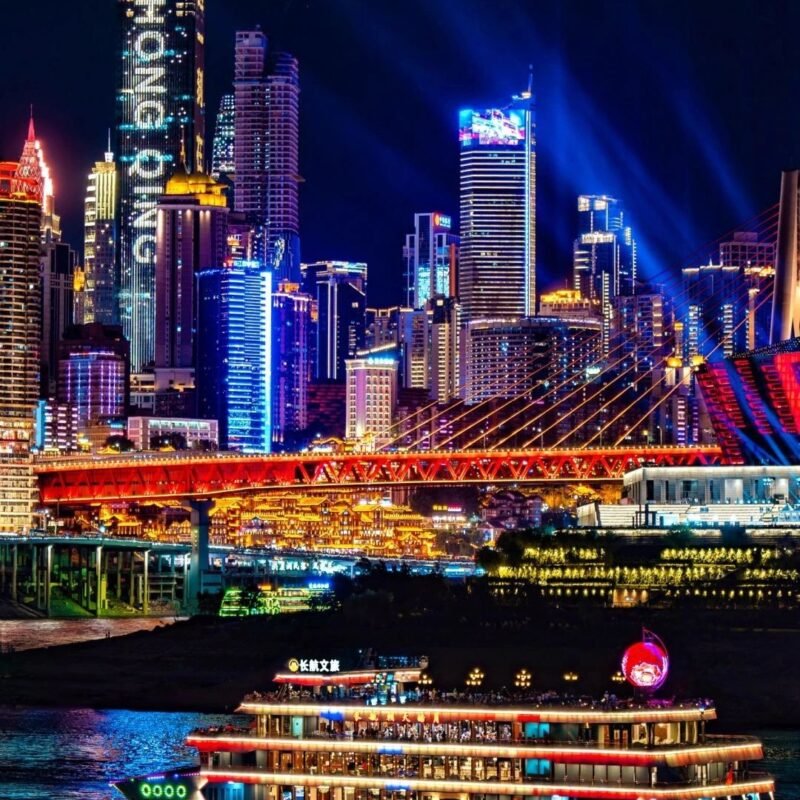
A boat tour along Chongqing’s rivers offered yet another perspective. Neon lights reflected on the water, buildings stacked across hillsides, the skyline cinematic. Sitting in the gentle rocking of the boat, the city’s chaos felt distant, yet fully present. It was a moment to slow down after the sensory whirlwind of the streets, a chance to breathe and reflect.
Luxury Escape: ISEYA Panoramic Hotel; A Room That Redefines “Wow”
After hours immersed in Chongqing’s relentless energy, stepping into ISEYA Panoramic Hotel felt like entering another world entirely. The lift carried us higher and higher, away from the streets that never sleep. With each floor, the city noise softened until it faded completely. Calm replaced chaos, and suddenly, the world below felt distant.
Then the doors opened, and the room revealed itself.
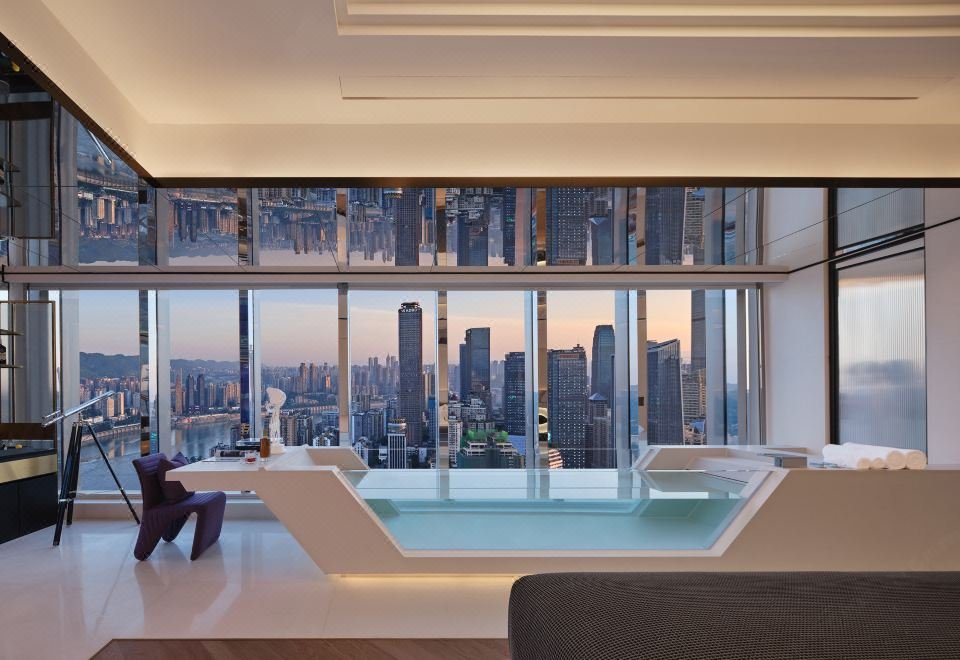
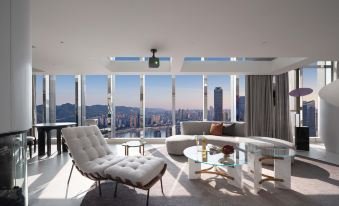
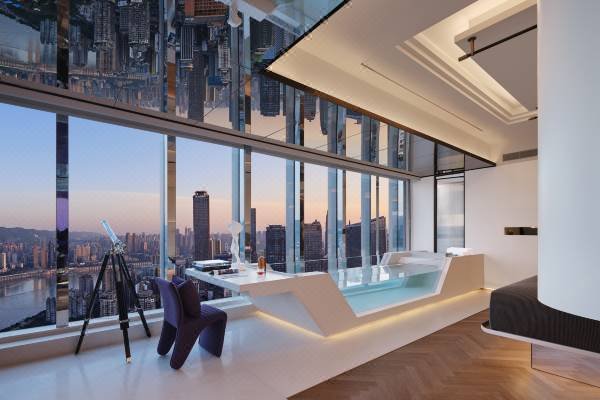
It wasn’t just a hotel room it was a penthouse-sized experience. Floor-to-ceiling windows stretched across the space, offering a panoramic view of the city that made you feel as if you were suspended above the skyline. At the center, a private swimming pool reflected the city lights below, blurring the line between inside and out. Floating there, champagne in hand, it felt as though Chongqing itself had been paused for us alone.
Every corner of the room was designed to impress. An egg-shaped chair created a cocoon for quiet reflection, while a fireplace next to the bed added warmth and intimacy, turning the space into a romantic retreat that most hotels can only dream of. The mirror ceiling in the living area expanded the space infinitely, reflecting water, light, and city views into a dizzying, dreamlike effect that made you feel like you were in a film.
The bathroom was pure indulgence. Two his-and-hers sinks allowed for complete privacy and space, while the rain shower overlooked the city through penthouse windows. I even found myself sitting in the shower, letting the water run, completely absorbed by the neon-lit skyline stretching endlessly before me. Every part of the room, from the bathroom to the living area, was surrounded by clear windows, ensuring that the city’s view never left your sight a constant reminder of where you were, high above it all.
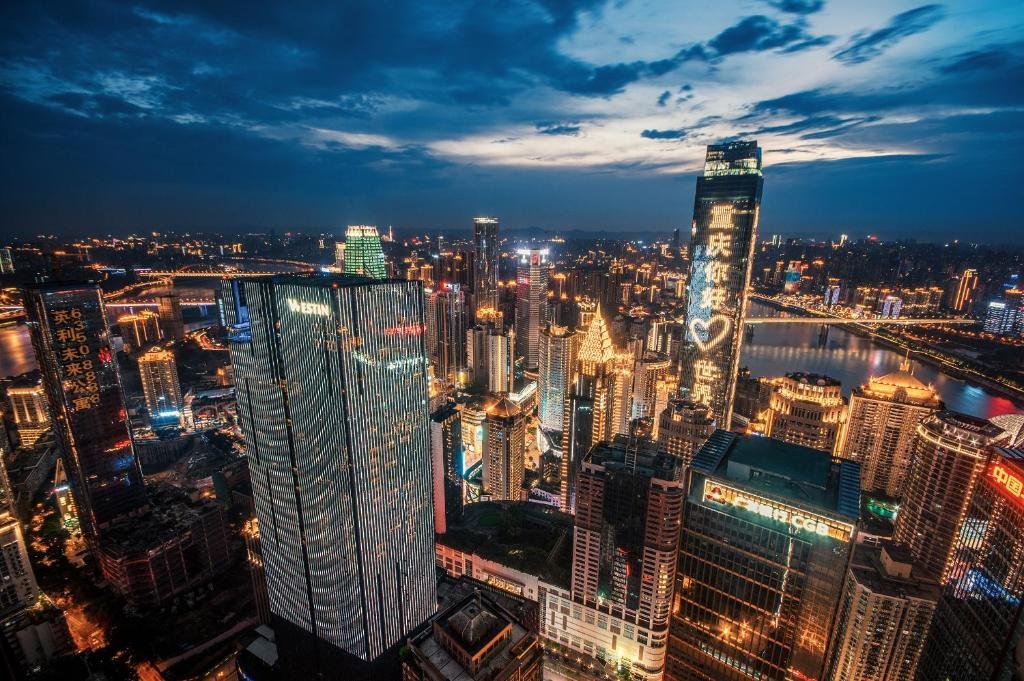
Technology turned ordinary convenience into delight. Room service arrived via robot, delivering our meals with a playful, futuristic touch. The projector and ambient sound system transformed the room into a private cinema or a calming sanctuary with rain sounds and soft music. With the lights dimmed and the blinds gliding open at a touch, the city revealed itself in stages first distant glimmers, then the full expanse of neon towers, rivers, and streets below.
Floating in the pool at night, with champagne in hand, the city lights danced across the water and glass, reflecting in every direction. The fireplace crackled softly, the projector glowed gently in the corner, and the skyline stretched endlessly beyond. The chaos of the city still existed below, but up here, it felt like another universe entirely private, luxurious, and breath taking.
ISEYA Panoramic Hotel isn’t just a place to stay; it’s a complete sensory experience. Every feature the pool, the fireplace, the mirror ceiling, the projector, the robot-delivered meals, the expansive windows was designed to impress, indulge, and awe. It’s a room that doesn’t just feel luxurious it makes you stop, breathe, and realize that sometimes the most powerful way to experience a city isn’t from within its chaos, but from a quiet, sky-high cocoon where the world unfolds just for you.
The only minor challenge was finding the hotel. While the location itself is central and convenient, ISEYA doesn’t have a standalone entrance. It’s tucked inside a larger building that houses multiple hotels and spas, and to reach our room, we had to navigate around six lifts, taking one and then another, which could feel a little confusing at first.
Another practical note: the hotel only accepts WeChat and Alipay for payments cash and Apple Pay aren’t accepted.
Even with these small hurdles, they were minor in comparison to the sheer wow factor of the room. From the private pool and mirror ceiling to the fireplace, egg chair, penthouse views, and robot-delivered room service, every detail made the stay feel like a luxury escape above the city, unforgettable in every way.
The Airport Ordeal: A Journey in Patience and Faith
Our last six hours in China stretched before us, a bittersweet window of time before the long flight home. We decided to make the most of it: a final dinner in Chongqing, one last taste of the city that had been nothing short of magical. But reality struck almost immediately.
Payment. In China, it’s simple: cash, WeChat, Alipay. Apple Pay doesn’t exist. Our digital wallets, for reasons unknown, refused to work. So we needed cash fast.
We rushed to a bank nearby, hoping for a quick withdrawal. It was Sunday. I didn’t realize it at the time. As I slid my card into the ATM, I felt a sinking feeling as the machine swallowed it whole. My heart raced. I couldn’t believe it. With a flight leaving in six hours, luggage already packed, taxis needed our lifeline was gone.
Panic set in. Chest tight, mind racing. How could this happen at the worst possible time? We spent the next hour hopping between phone calls, Google Translate, and frantic gestures. The customer service staff didn’t speak English; we barely spoke Mandarin. The conversation dragged on, each exchange more frustrating than the last. The flight clock ticked loudly in my mind.
Finally, after what felt like an eternity, they couldn’t return our card. But in a gesture of goodwill, they handed us 150 UK pounds in Chinese currency. Relief washed over me, tempered by lingering stress. At least we could pay for a taxi. At least we weren’t stranded.
Back at the hotel, kindness softened the chaos. Using Google Translate, we explained our predicament. The hotel staff, without hesitation, arranged a complimentary cab to the airport. They didn’t need to they could have said it wasn’t their problem yet they went above and beyond. Even in moments of stress, humanity still existed.
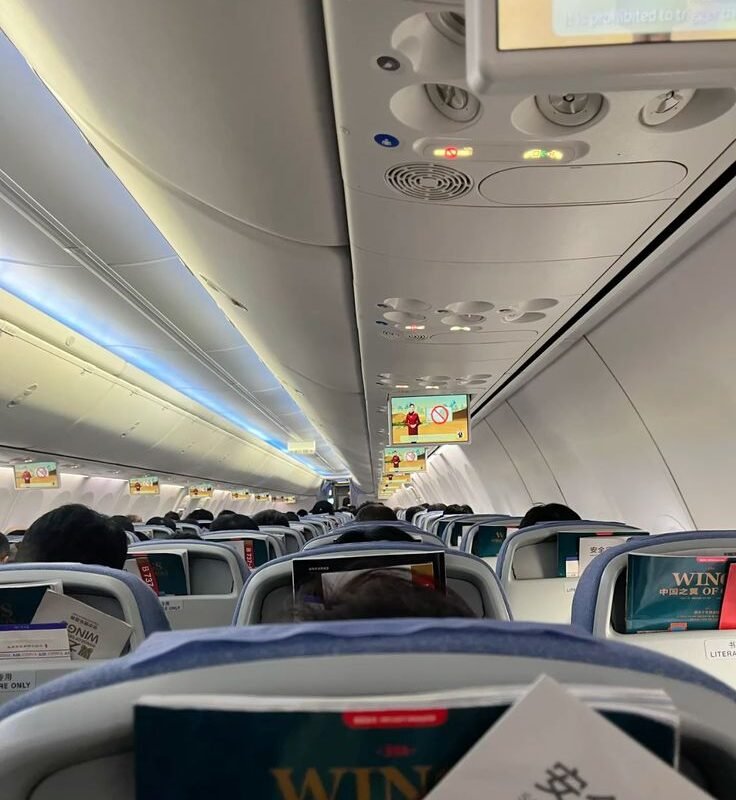
The airport itself was a different kind of battlefield. With an eight-hour layover, we thought a sleeping pod would offer some rest a small refuge. Roughly £20 for three hours, it seemed reasonable. Yet even this small comfort couldn’t shield us from the next wave of chaos.
By the time we emerged, our flight was boarding. Not just boarding practically leaving. We sprinted through the terminal, luggage clutched tightly, eyes fixed on the plane just visible through the glass. The gate staff, however, were disinterested, almost amused by our urgency.
I tried to explain. I gestured. I pointed to the plane. “It’s our flight!” I shouted. The language barrier turned every plea into absurd pantomime. One staff member laughed. Others looked past us. I felt invisible, dismissed, frustrated, angry. Heart pounding, stomach churning, tears threatening.
We ran alongside our fate, pleading for someone anyone to call the pilot, call the gate, do something. Yet everything felt against us. Watching our plane start to taxi away, helpless, I felt panic surge. My daughter was waiting at home. Every promise I’d made to her to return on time suddenly felt broken. The weight of distance, helplessness, and unresponsiveness collided into a crushing wave of despair.
We wandered the airport, aimless yet desperate, bouncing between help desks and security. Each stop felt like a dead end. Wi-Fi was non-existent without a Chinese SIM, so even buying a new flight ourselves was impossible. Time slowed. Anxiety, anger, and fear swirled inside me.
And then I prayed. Not quietly, not politely, not for show. I knelt on the cold airport floor, music softly playing in my headphones, hands pressed together, voice trembling. I begged, pleaded, surrendered. For a solution, for calm, for the way home. I didn’t care who watched. I didn’t care about embarrassment. I just needed help.
Amid the chaos, I met another soul in distress. A woman from Zimbabwe, trapped in the airport after her visa was denied, surviving for three days on water and biscuits. I cried for her. I prayed with her. Shared our fears, our exhaustion. We connected in a way that transcended language, nationality, everything.
Forty minutes later, a miracle. The same staff member who had dismissed us, indifferent and cold, returned with new boarding passes. Relief flooded me. I hugged him, tears spilling, repeating “thank you” until it felt insufficient.
The airport ordeal left me shaken, exhausted, and emotionally raw. Yet in the midst of fear and frustration, I discovered something profound: resilience, faith, and humanity can shine even in the bleakest moments. The subtle discrimination, the lack of concern unforgettable, yes but it didn’t erase the wonders of China: the lantern-lit streets, the sizzling street food, the penthouse pool overlooking the skyline.
Travel isn’t always smooth. It isn’t always kind. But it is always unforgettable.
Would I return to China? Absolutely. I will go back, stronger, wiser, prepared. And next time, I’ll embrace it all: the chaos, the beauty, and the moments that make a journey truly unforgettable.
Reflections: Chongqing’s Rhythm and Magic
Chongqing isn’t about ticking off landmarks or adrenaline-filled adventures. It’s about feeling the city’s rhythm, tasting its flavours, seeing its views, and soaking in its energy. From street-level chaos to sky-high calm, every experience is layered, immersive, and unforgettable.
Sitting in ISEYA’s private pool, champagne in hand, I realized travel isn’t just about destinations. It’s about moments quiet swims, shared meals, beautiful photographs, and the sheer wonder of being somewhere completely different from home.
Chongqing is a city of contrasts: vibrant streets, bold cuisine, centuries-old culture, and sky-high luxury. Every corner has a story. Every light pulses with energy. Explore, wander, taste, and look up the city will show you things you didn’t know you were looking for. And when the sun sets and neon lights glow, take a moment to just sit, sip, and watch. Chongqing at night is a memory you’ll carry long after you leave.
Because the experience is one thing… But reality matters too.
What It Actually Costs
- Hotel: £120 -£170 per night (depending on room & season)
- Taxis: £2 £6 per ride
(very affordable, quick journeys – Only Alipay & Wechat. No Apple pay)
- Food: £3 -£15 per meal (street food to casual dinining)
- Drinks: £1-£6 (from local spots to hotel tail bars)
- Extras: Spa, room service & snacks will add up
Overall – you can do Chongging comfortably without overspend-ing. but it’s easy to indulge.
The Overall Experience
- Atmosphere: 8/10
- £120 -£170 per night (Vibrant, electric, unforgettable amazing views at night)
- Food Scene: 9/10
(Variety is unmatched, flavours, options and experiences with new foods
- People 6.5 (Busy, alot of people recording me, staring without greeting, not much support around)
- Cleanliness: 9/10(Cleanness is spot on with no room for complaints)
- Customer Service: ( Staff are welcoming, easy to approach and always willing to help. Communication through the Translate app, as English is not spoken)
Aesthetic: 9/10 (Very futuristic, nothing you’ll find in the UK. It’s one of those places that feels different from everywhere else, and that’s the point.)
Is It Worth It?
This is for:
- People who love real immersive experiences
- Food lovers who want variety without limits
- Travellers who enjoy energy without lasting comfort
- People who enjoy culture and history
- Extras: Spa, room service & snacks will add up